- ราคาทองคำกลับมาเคลื่อนไหวในทิศทางลงเหมือนเดิม โดยกำลังทดสอบระดับ $4,400 เมื่อสัปดาห์ที่ประกาศดัชนีราคาผู้บริโภค (CPI) ของสหรัฐฯ เริ่มต้นขึ้น.
- ดอลลาร์สหรัฐทรงตัว ขณะที่ความแข็งแกร่งของเงินเยนญี่ปุ่นและความกังวลเรื่องหนี้สหรัฐฯ หักล้างรายงานการจ้างงานนอกภาคเกษตรกรรม (NFP) ที่แข็งแกร่ง.
- ราคาทองคำยังคงเคลื่อนไหวติดอยู่ระหว่างเส้นค่าเฉลี่ยเคลื่อนที่ 21 วัน (SMA) และ 50 วัน (SMA) ในขณะที่ดัชนี RSI ยังคงทรงตัวอยู่เหนือระดับ 50.
ราคาทองคำได้เริ่มต้นสัปดาห์ใหม่ด้วยแนวโน้มขาลง โดยกลับมาเคลื่อนไหวในทิศทางขาลงเหมือนเดิม ขณะที่กำลังทดสอบระดับ $4,400 ท่ามกลางปริมาณการซื้อขายที่เบาบางเนื่องจากวันหยุดในสหรัฐอเมริกา (US).
ราคาทองคำกำลังเผชิญกับปัจจัยกดดันจากราคาน้ำมันที่ปรับตัวสูงขึ้นล่าสุด ซึ่งยังคงกระตุ้นความกังวลเรื่องเงินเฟ้อและบ่งชี้ถึงความจำเป็นในการคุมเข้มเชิงนโยบายทั่วโลก.
โลหะมีค่าแวววาวได้ประโยชน์จากอัตราดอกเบี้ยที่ต่ำ และความคาดหมายเกี่ยวกับการปรับขึ้นอัตราดอกเบี้ยของธนาคารกลางหลักทั่วโลก รวมถึงธนาคารกลางสหรัฐฯ (เฟด) เป็นปัจจัยบั่นทอนทองคำแท่งซึ่งเป็นสินทรัพย์ที่ไม่ได้ผลตอบแทนในรูปดอกเบี้ย.
สิ่งนี้ นอกเหนือจากรายงานตลาดแรงงานสหรัฐฯ ที่แข็งแกร่งเมื่อวันศุกร์ ยังคงทำให้การคาดการณ์การปรับขึ้นอัตราดอกเบี้ยของ Fed ยังคงมีอยู่สำหรับการประชุมนโยบายการเงินในเดือนกันยายน.
ตัวเลขการจ้างงานนอกภาคเกษตร (NFP) เพิ่มขึ้น 162,000 ตำแหน่งในเดือนสิงหาคม ซึ่งเกือบเป็นสามเท่าของคาดการณ์ที่ 56,000 ตำแหน่ง อัตราการว่างงานยังคงอยู่ที่ 4.1% ส่วนอัตราการเข้าร่วมแรงงานฟื้นตัวขึ้นเป็น 61.6% จาก 61.4% ในเดือนกรกฎาคม.
อิงจาก TD Securities ข้อมูลล่าสุดตอกย้ำมุมมองที่ว่าสถานการณ์การจ้างงานยังคงมีความยืดหยุ่น พวกเขาให้เหตุผลว่า เมื่อพิจารณาตัวเลขทางการควบคู่ไปกับ “ภาคเอกชนที่มีมุมมองด้านการจ้างงานที่ดีขึ้น” สิ่งนี้ “บ่งชี้ว่าตลาดแรงงานอยู่ในจุดที่ดี และอาจจะกำลังดีขึ้นกว่าเดิมด้วยซ้ำ”
ตลาดยังคงประเมินว่ามีโอกาสประมาณ 57% ที่ธนาคารกลางสหรัฐฯ (Fed) จะปรับอัตราดอกเบี้ยขึ้นในเดือนนี้ หลังจากที่ข้อมูลการจ้างงานนอกภาคเกษตร (NFP) ถูกเผยแพร่ โดยขณะนี้ปัจจัยสำคัญส่วนใหญ่ขึ้นอยู่กับข้อมูลอัตราเงินเฟ้อจากดัชนีราคาผู้บริโภค (CPI) ที่จะประกาศในวันศุกร์นี้.
อย่างไรก็ตาม ข้อเสียของทองคำดูเหมือนจะมีจำกัดจากค่าเงินดอลลาร์สหรัฐ (USD) ที่มีเสถียรภาพในวงกว้าง เนื่องจากผู้ซื้อได้ลดความสนใจอย่างรวดเร็วหลังจากการพุ่งขึ้นหลังการประกาศตัวเลขการจ้างงานนอกภาคเกษตร (NFP) ท่ามกลางความกังวลเกี่ยวกับหนี้รัฐบาลสหรัฐฯ ที่เพิ่มขึ้นและการปรับราคาความคาดหมายของธนาคารกลางญี่ปุ่น (BoJ) ที่ใช้นโยบายการเงินแบบเข้มงวดอย่างมาก ซึ่งผลักดันให้เงินเยนญี่ปุ่น (JPY) แข็งค่าขึ้นอย่างมากโดยส่งผลกระทบต่อคู่เงิน USD/JPY.
เทรดเดอร์ USD ดูเหมือนจะเมินเฉยต่อการโจมตีตอบโต้ล่าสุดระหว่างสหรัฐฯ และอิหร่านในช่องแคบฮอร์มุزเช่นกัน เนื่องจากสภาพการซื้อขายที่เบาบางและความคาดหวังต่อธนาคารกลางสหรัฐฯ ก่อนการประกาศข้อมูลเงินเฟ้อในสัปดาห์นี้ทำให้พวกเขายังคงระมัดระวังตัว ตลาดสหรัฐฯ ปิดทำการในวันจันทร์เนื่องในวันแรงงาน.
มองไปข้างหน้า ทองคำยังคงมีความเสี่ยงต่อความแข็งแกร่งของดอลลาร์สหรัฐฯ ที่อาจกลับมา หากความตึงเครียดระหว่างสหรัฐฯ และอิหร่านทวีความรุนแรงยิ่งขึ้น สภาวะตลาดที่เบาบางอาจทำให้การเคลื่อนไหวของราคาทองคำมีความผันผวนเกินจริง.
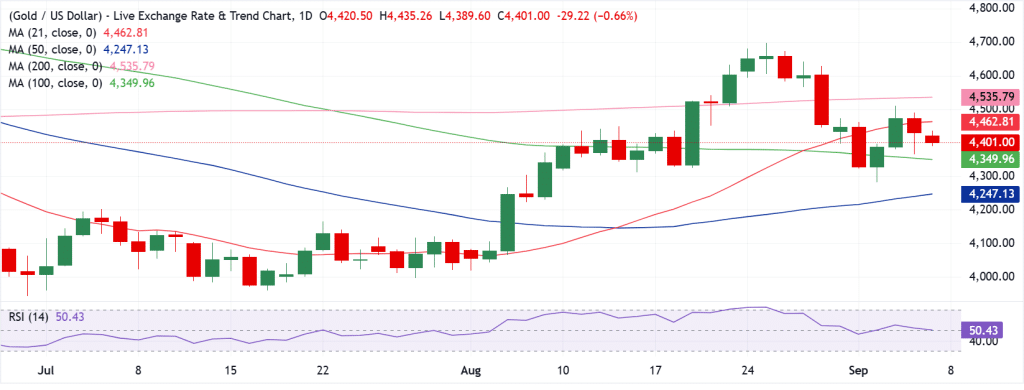
ในกราฟรายวัน XAU/USD ซื้อขายอยู่ที่ $4,401.00 โดยเคลื่อนไหวอยู่ระหว่างเส้นค่าเฉลี่ยเคลื่อนที่หลัก ทำให้แนวโน้มในระยะสั้นยังคงเป็นกลางโดยทั่วไป ราคาทองคำสปอตยังคงอยู่เหนือเส้นค่าเฉลี่ยเคลื่อนที่แบบเรียบ (SMA) 50 วัน ใกล้ระดับ $4,247 และ SMA 100 วัน ราวระดับ $4,350 ซึ่งทั้งสองระดับนี้ชี้ให้เห็นถึงความต้องการพื้นฐานเมื่อราคาปรับตัวลง, แต่ราคาได้ร่วงลงต่ำกว่าค่าเฉลี่ยเคลื่อนที่แบบเรียบ 21 วัน (SMA) ที่ประมาณ $4,463 และยังคงอยู่ต่ำกว่าค่าเฉลี่ยเคลื่อนที่แบบเรียบ 200 วัน (SMA) ใกล้ระดับ $4,536 อย่างชัดเจน ซึ่งบ่งชี้ว่าความพยายามในการฟื้นตัวยังคงถูกจำกัดโดยแนวต้านของแนวโน้มระยะกลางและระยะยาว ดัชนีความแข็งแกร่งสัมพัทธ์ (RSI) ที่ประมาณ 50 ชี้ให้เห็นถึงโมเมนตัมที่สมดุล ซึ่งสนับสนุนมุมมองว่าตลาดกำลังอยู่ในช่วงการรวมตัวมากกว่าที่จะมีแนวโน้มที่ชัดเจน.
ด้านราคาสูงสุด แนวต้านทันทีอยู่ที่เส้นค่าเฉลี่ยเคลื่อนที่ 21 วัน (SMA) บริเวณ $4,463 โดยมีแนวต้านที่แข็งแกร่งกว่าอยู่ที่เส้นค่าเฉลี่ยเคลื่อนที่ 200 วัน (SMA) ใกล้ระดับ $4,536 ซึ่งผู้ขายอาจกลับมาควบคุมตลาดได้หากราคาปรับตัวสูงขึ้นต่อ ด้านราคาลง แนวรับแรกอยู่ที่ SMA 100 วัน ใกล้ระดับ $4,350 ก่อนถึง SMA 50 วัน ใกล้ระดับ $4,247, และการหลุดลงใต้โซนหลังนี้จะเปิดทางสู่ช่วงปรับฐานที่ลึกขึ้น ส่วนการรักษาระดับราคาเหนือโซนดังกล่าวจะช่วยให้รูปแบบการรวมตัวโดยรวมยังคงอยู่.


 ไทย
ไทย  English
  简体中文
简体中文  繁體中文
繁體中文  Bahasa Indonesia
  日本語
日本語  Tiếng Việt
$4,400: ราคาทองคำกำลังเผชิญความยากลำบากที่ระดับนี้ แต่ฝ่ายผู้ซื้อยังไม่ยอมแพ้
ราคาทองคำได้เริ่มต้นสัปดาห์ใหม่ด้วยแนวโน้มขาลง โดยกลับมาเคลื่อนไหวในทิศทางขาลงเหมือนเดิม ขณะที่กำลังทดสอบระดับ $4,400 ท่ามกลางปริมาณการซื้อขายที่เบาบางเนื่องจากวันหยุดในสหรัฐอเมริกา (US).
ราคาทองคำกำลังเผชิญกับปัจจัยกดดันจากราคาน้ำมันที่ปรับตัวสูงขึ้นล่าสุด ซึ่งยังคงกระตุ้นความกังวลเรื่องเงินเฟ้อและบ่งชี้ถึงความจำเป็นในการคุมเข้มเชิงนโยบายทั่วโลก.
โลหะมีค่าแวววาวได้ประโยชน์จากอัตราดอกเบี้ยที่ต่ำ และความคาดหมายเกี่ยวกับการปรับขึ้นอัตราดอกเบี้ยของธนาคารกลางหลักทั่วโลก รวมถึงธนาคารกลางสหรัฐฯ (เฟด) เป็นปัจจัยบั่นทอนทองคำแท่งซึ่งเป็นสินทรัพย์ที่ไม่ได้ผลตอบแทนในรูปดอกเบี้ย.
สิ่งนี้ นอกเหนือจากรายงานตลาดแรงงานสหรัฐฯ ที่แข็งแกร่งเมื่อวันศุกร์ ยังคงทำให้การคาดการณ์การปรับขึ้นอัตราดอกเบี้ยของ Fed ยังคงมีอยู่สำหรับการประชุมนโยบายการเงินในเดือนกันยายน.
ตัวเลขการจ้างงานนอกภาคเกษตร (NFP) เพิ่มขึ้น 162,000 ตำแหน่งในเดือนสิงหาคม ซึ่งเกือบเป็นสามเท่าของคาดการณ์ที่ 56,000 ตำแหน่ง อัตราการว่างงานยังคงอยู่ที่ 4.1% ส่วนอัตราการเข้าร่วมแรงงานฟื้นตัวขึ้นเป็น 61.6% จาก 61.4% ในเดือนกรกฎาคม.
อิงจาก TD Securities ข้อมูลล่าสุดตอกย้ำมุมมองที่ว่าสถานการณ์การจ้างงานยังคงมีความยืดหยุ่น พวกเขาให้เหตุผลว่า เมื่อพิจารณาตัวเลขทางการควบคู่ไปกับ “ภาคเอกชนที่มีมุมมองด้านการจ้างงานที่ดีขึ้น” สิ่งนี้ “บ่งชี้ว่าตลาดแรงงานอยู่ในจุดที่ดี และอาจจะกำลังดีขึ้นกว่าเดิมด้วยซ้ำ”
ตลาดยังคงประเมินว่ามีโอกาสประมาณ 57% ที่ธนาคารกลางสหรัฐฯ (Fed) จะปรับอัตราดอกเบี้ยขึ้นในเดือนนี้ หลังจากที่ข้อมูลการจ้างงานนอกภาคเกษตร (NFP) ถูกเผยแพร่ โดยขณะนี้ปัจจัยสำคัญส่วนใหญ่ขึ้นอยู่กับข้อมูลอัตราเงินเฟ้อจากดัชนีราคาผู้บริโภค (CPI) ที่จะประกาศในวันศุกร์นี้.
อย่างไรก็ตาม ข้อเสียของทองคำดูเหมือนจะมีจำกัดจากค่าเงินดอลลาร์สหรัฐ (USD) ที่มีเสถียรภาพในวงกว้าง เนื่องจากผู้ซื้อได้ลดความสนใจอย่างรวดเร็วหลังจากการพุ่งขึ้นหลังการประกาศตัวเลขการจ้างงานนอกภาคเกษตร (NFP) ท่ามกลางความกังวลเกี่ยวกับหนี้รัฐบาลสหรัฐฯ ที่เพิ่มขึ้นและการปรับราคาความคาดหมายของธนาคารกลางญี่ปุ่น (BoJ) ที่ใช้นโยบายการเงินแบบเข้มงวดอย่างมาก ซึ่งผลักดันให้เงินเยนญี่ปุ่น (JPY) แข็งค่าขึ้นอย่างมากโดยส่งผลกระทบต่อคู่เงิน USD/JPY.
เทรดเดอร์ USD ดูเหมือนจะเมินเฉยต่อการโจมตีตอบโต้ล่าสุดระหว่างสหรัฐฯ และอิหร่านในช่องแคบฮอร์มุزเช่นกัน เนื่องจากสภาพการซื้อขายที่เบาบางและความคาดหวังต่อธนาคารกลางสหรัฐฯ ก่อนการประกาศข้อมูลเงินเฟ้อในสัปดาห์นี้ทำให้พวกเขายังคงระมัดระวังตัว ตลาดสหรัฐฯ ปิดทำการในวันจันทร์เนื่องในวันแรงงาน.
มองไปข้างหน้า ทองคำยังคงมีความเสี่ยงต่อความแข็งแกร่งของดอลลาร์สหรัฐฯ ที่อาจกลับมา หากความตึงเครียดระหว่างสหรัฐฯ และอิหร่านทวีความรุนแรงยิ่งขึ้น สภาวะตลาดที่เบาบางอาจทำให้การเคลื่อนไหวของราคาทองคำมีความผันผวนเกินจริง.
ในกราฟรายวัน XAU/USD ซื้อขายอยู่ที่ $4,401.00 โดยเคลื่อนไหวอยู่ระหว่างเส้นค่าเฉลี่ยเคลื่อนที่หลัก ทำให้แนวโน้มในระยะสั้นยังคงเป็นกลางโดยทั่วไป ราคาทองคำสปอตยังคงอยู่เหนือเส้นค่าเฉลี่ยเคลื่อนที่แบบเรียบ (SMA) 50 วัน ใกล้ระดับ $4,247 และ SMA 100 วัน ราวระดับ $4,350 ซึ่งทั้งสองระดับนี้ชี้ให้เห็นถึงความต้องการพื้นฐานเมื่อราคาปรับตัวลง, แต่ราคาได้ร่วงลงต่ำกว่าค่าเฉลี่ยเคลื่อนที่แบบเรียบ 21 วัน (SMA) ที่ประมาณ $4,463 และยังคงอยู่ต่ำกว่าค่าเฉลี่ยเคลื่อนที่แบบเรียบ 200 วัน (SMA) ใกล้ระดับ $4,536 อย่างชัดเจน ซึ่งบ่งชี้ว่าความพยายามในการฟื้นตัวยังคงถูกจำกัดโดยแนวต้านของแนวโน้มระยะกลางและระยะยาว ดัชนีความแข็งแกร่งสัมพัทธ์ (RSI) ที่ประมาณ 50 ชี้ให้เห็นถึงโมเมนตัมที่สมดุล ซึ่งสนับสนุนมุมมองว่าตลาดกำลังอยู่ในช่วงการรวมตัวมากกว่าที่จะมีแนวโน้มที่ชัดเจน.
ด้านราคาสูงสุด แนวต้านทันทีอยู่ที่เส้นค่าเฉลี่ยเคลื่อนที่ 21 วัน (SMA) บริเวณ $4,463 โดยมีแนวต้านที่แข็งแกร่งกว่าอยู่ที่เส้นค่าเฉลี่ยเคลื่อนที่ 200 วัน (SMA) ใกล้ระดับ $4,536 ซึ่งผู้ขายอาจกลับมาควบคุมตลาดได้หากราคาปรับตัวสูงขึ้นต่อ ด้านราคาลง แนวรับแรกอยู่ที่ SMA 100 วัน ใกล้ระดับ $4,350 ก่อนถึง SMA 50 วัน ใกล้ระดับ $4,247, และการหลุดลงใต้โซนหลังนี้จะเปิดทางสู่ช่วงปรับฐานที่ลึกขึ้น ส่วนการรักษาระดับราคาเหนือโซนดังกล่าวจะช่วยให้รูปแบบการรวมตัวโดยรวมยังคงอยู่.
หมวดหมู่
โพสต์ล่าสุด
XAU/USD extends losing spree as US bond yields hold ground
XAU/USD sellers remain in control while below 21-day SMA
$4,200 remains a tough nut to crack for Gold bulls
ชอบบทความนี้ไหม? แชร์เลย!
พร้อมเทรดหรือยัง?
ปลดปล่อยทักษะการเทรดของคุณด้วยบัญชี Maxain ของคุณวันนี้!
การให้ทุนที่ง่ายดายและ การถอนเงิน
ไม่มีค่าธรรมเนียมการฝาก